
 Artist · Author · Choreographer
Selected Visual Practice2-D
Selected 2-D visual practice
Making the unseen
perceivable.
Navaji David Nava is a multi-ethnic Mexican-American interdisciplinary artist from South Texas whose visual practice translates inner experience into image.
Across light-responsive painting, perceptual studies, conceptual photography, and illustration, the medium changes while the inquiry remains: how can what is inward, unseen, or difficult to name be given a form another person can encounter?

Nominated in both 2-D and 3-D categories.
Big Medium Austin Studio Tour; two works acquired.
Three years of K–5 visual-art teaching in Austin.
Texas, Florida, New York City, the Rio Grande Valley, and Ecuador.
01 · Signature body of work
Light as
revelation.
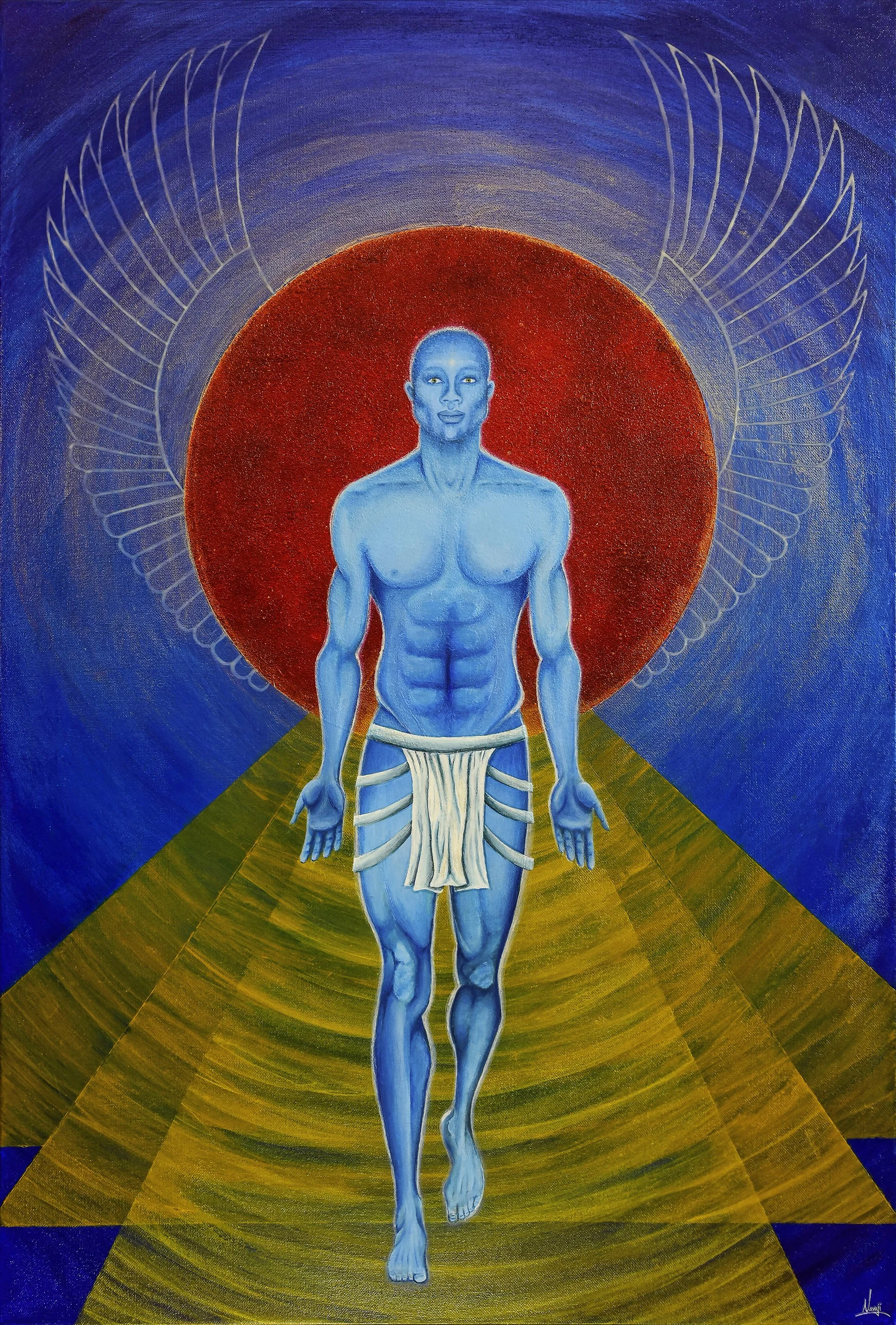
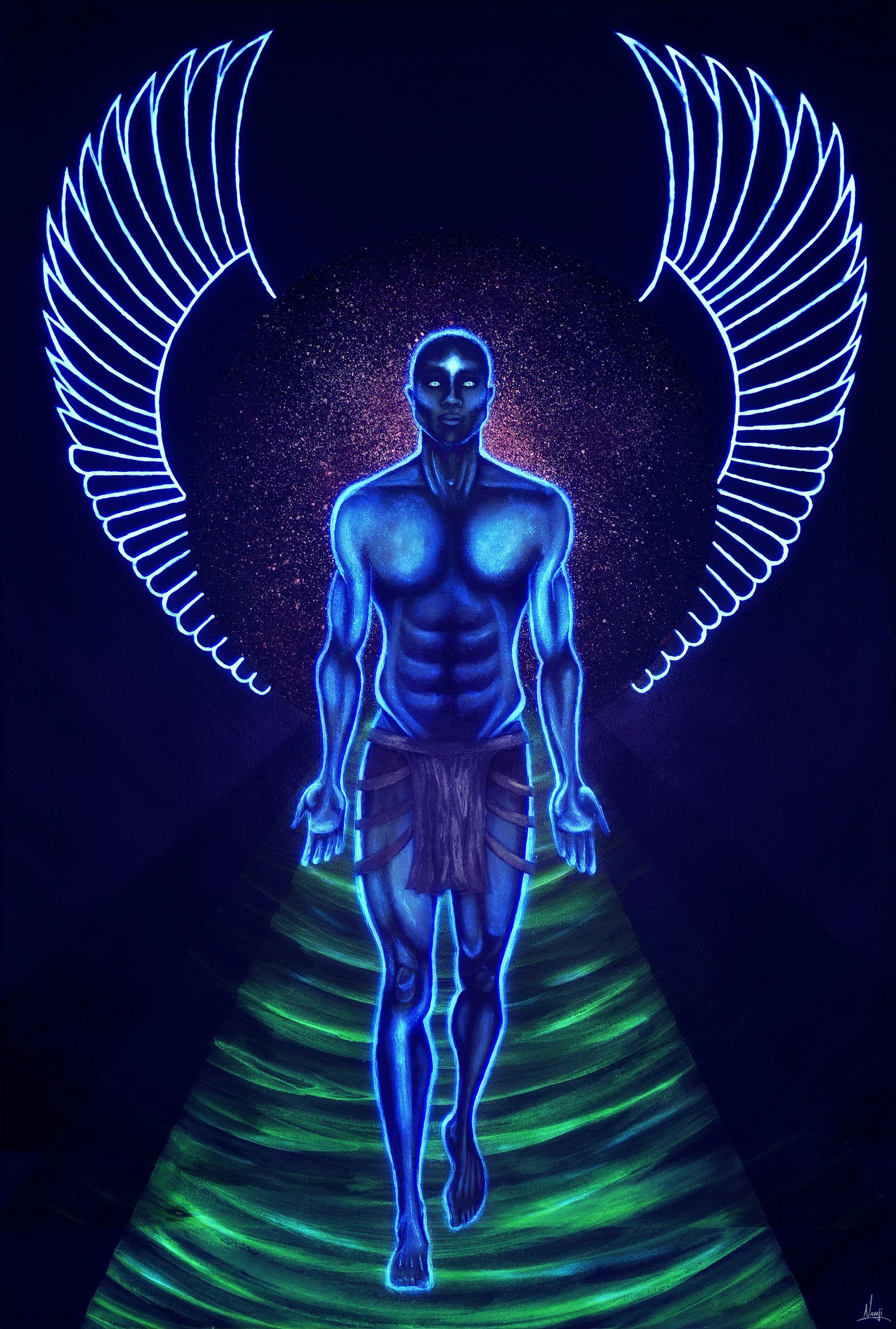
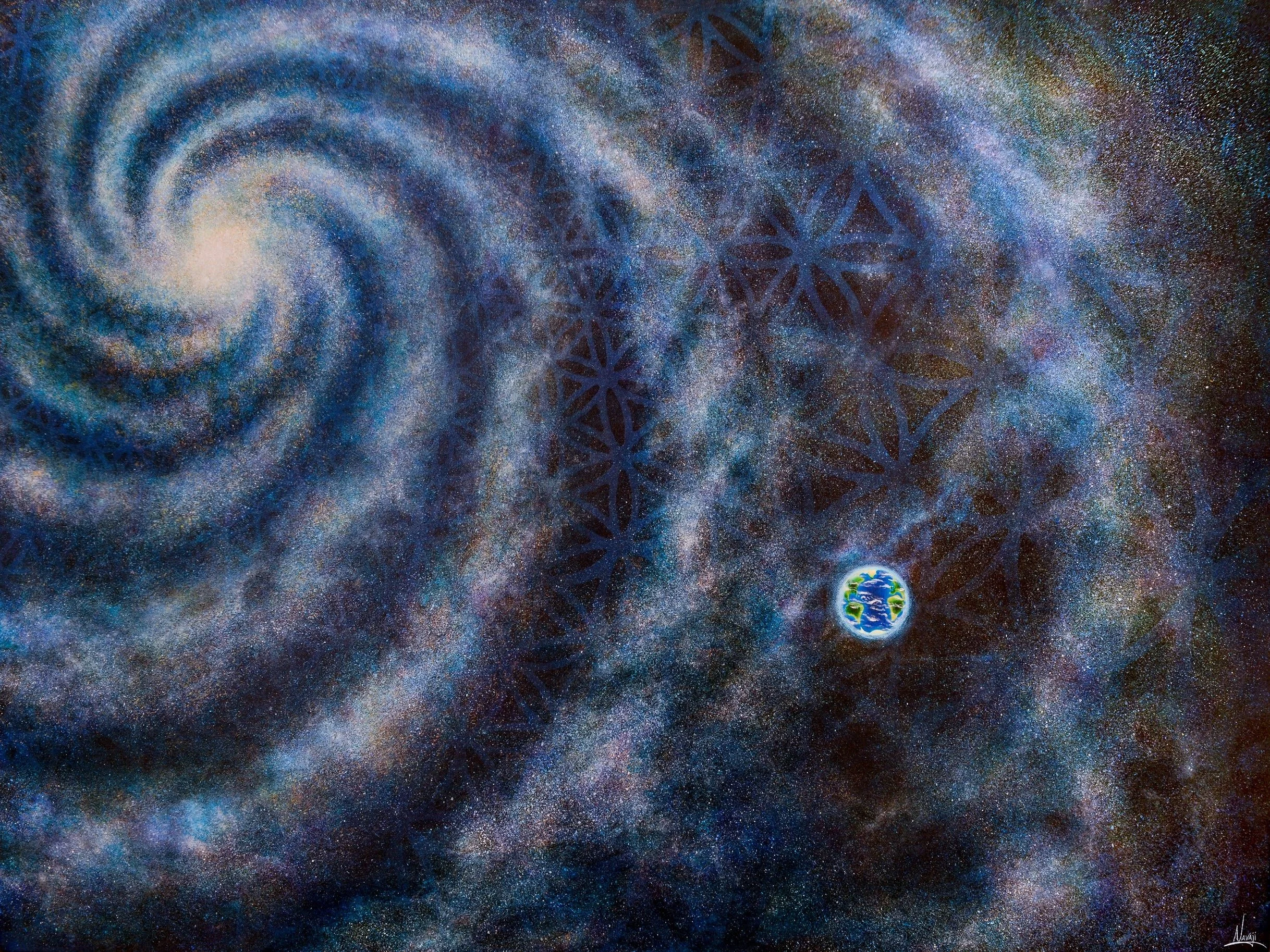
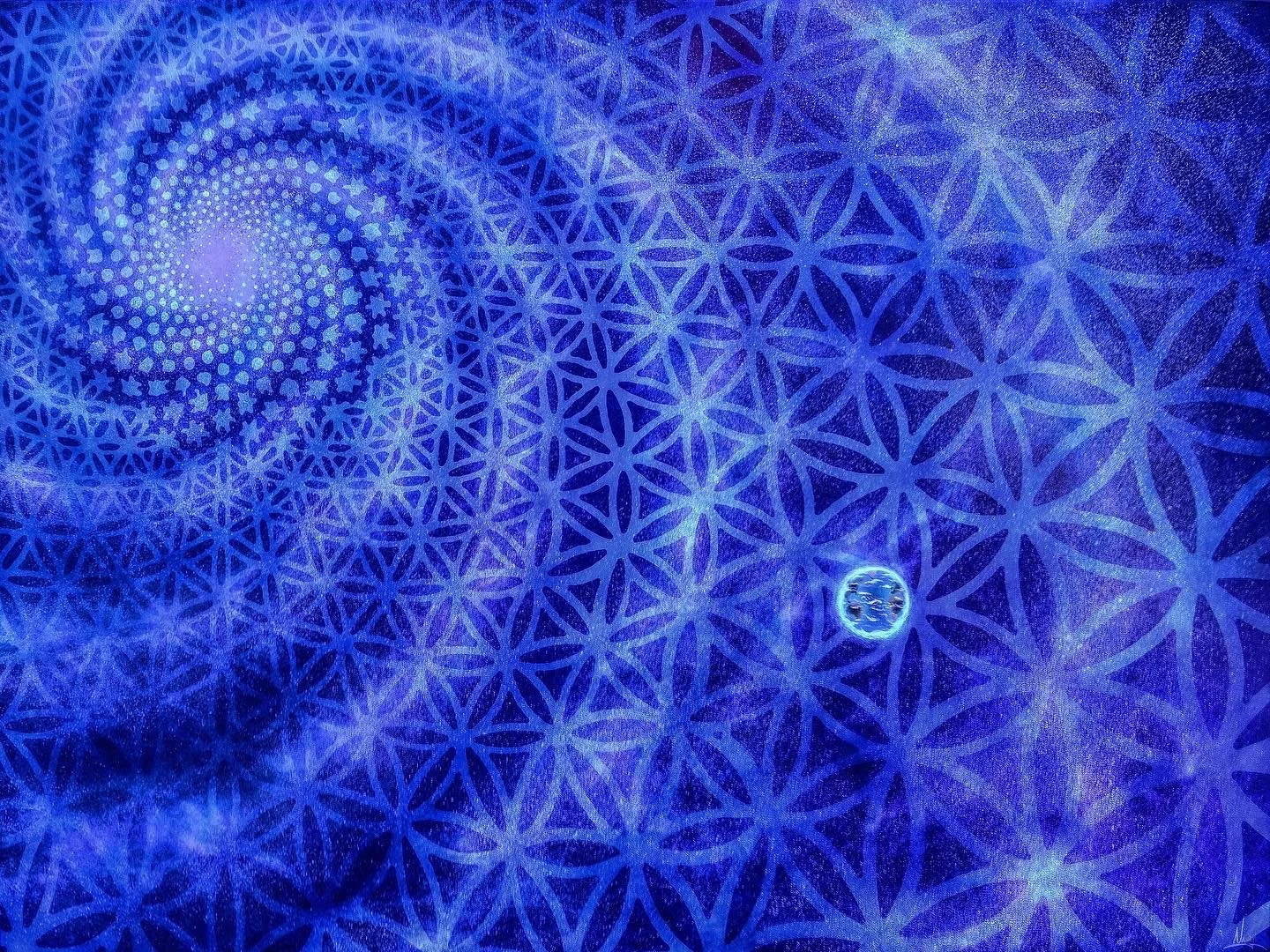
A single canvas can contain more than one visible state.
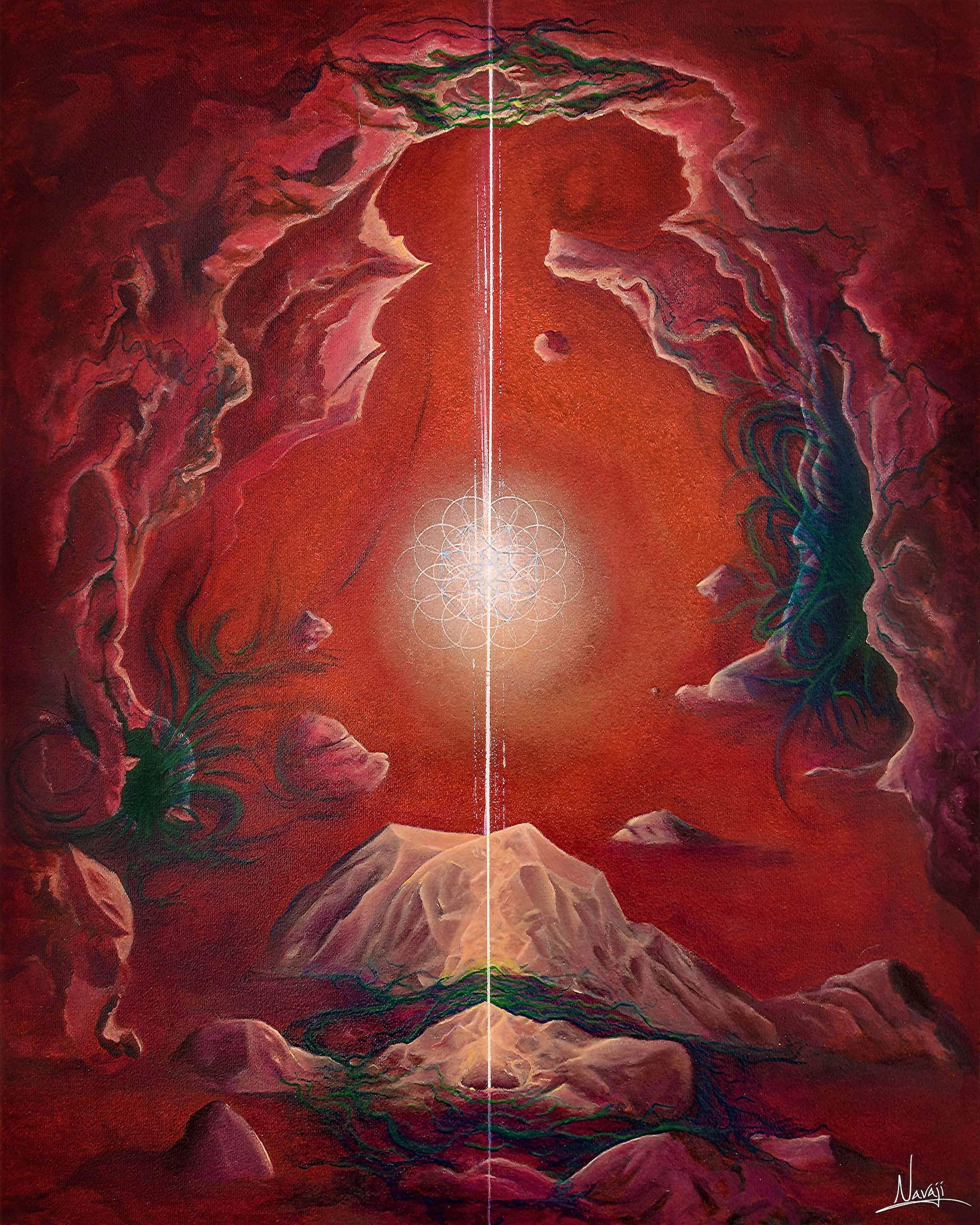
The Light Works began with a question: how might a painting invite someone to experience the possibility that more is present than what can be perceived at first glance?
UV-sensitive and phosphorescent pigments are worked into the paintings themselves. Under changing illumination, forms emerge, recede, or intensify. The shifts are not post-production effects; changing light alters the material encounter with the same canvas.
Select a light state beneath each work. Click the artwork to inspect it.
Light Work 01
The Powers


Light Work 02
RA
Light Work 03
Satori
Light Work 04
Kalkin Chakra


Independent material development
Perception becomes
material.
Navaji developed his painting practice independently through repeated studio experimentation. Rather than claiming singular invention within the broad history of light-responsive art, the work reflects a rigorously developed methodology built to solve a specific visual problem: a painting capable of withholding and revealing information as the conditions of seeing change.
That premise—what becomes visible when perception changes—continues through the rest of the practice.
South Texas · family · language
A language
between worlds.
When spoken language could not carry everything, image became another way to speak.
Navaji grew up in McAllen in the Rio Grande Valley, within a close, multi-generational Mexican-American family. Like many people of his generation in the border region, he experienced the consequences of assimilation pressure: Spanish could be understood more easily than it could always be spoken back. Art became another language through which interior life, family feeling, and spiritual experience could cross that gap.
Making was already present in the family. His grandmother worked across sewing, beadwork, sculptural flowers, devotional objects, and bridal craft, while holding devotional and healing practices alongside Catholic faith. Navaji recognizes a related ethic in his own independently developed practice: careful observation, material problem-solving, spiritual inquiry, and the willingness to make what he does not yet know how to make.
“Sanctity is the birthright of all beings.”
— Navaji David Nava
Selected paintings
Inner image,
outer form.
Navaji's paintings begin in what he describes as inner or clairvoyant perception.
Some emerge from meditation; others from perception arising during his energetic practice. The artistic task is not to require the viewer to accept a metaphysical claim. It is to translate a subjective experience into color, geometry, figure, atmosphere, and material form with enough clarity that another person can encounter the image on its own terms.
Perceptual studies · observation → sketch → painting
Astral
Studies.
Here the source process becomes visible.
Astral Study I began after Navaji observed what he describes as energy moving around a person during an energetic-healing session. He sketched afterward in an effort to retain and understand what he had perceived before translating it into paint.
Astral Study II developed from observing shifts in his own awareness through what he describes as different planes of consciousness and nature.
The works are presented as records of the artist's subjective perceptual process—not as scientific diagrams.
02 · Photography / ATMA Artist
Image as
archetype.
Portraiture extends the same inquiry into another body.
In the ongoing ATMA Artist series, Navaji develops the concept, photography, styling, props, location, and creative direction. Working primarily in natural light and outdoor environments, he asks how the sitter's existing character can be heightened into an image of mystery, dignity, vulnerability, or mythic presence.
For a queer, multi-ethnic Mexican-American artist formed in the borderlands of South Texas, this also becomes a question of belonging: who is permitted to appear inside an image of beauty, sanctity, archetype, or spiritual imagination?
Concept · photography · styling · props · location · creative direction — Navaji David Nava
Isabelle
Natural light · Austin, Texas
Aidan
Natural light · Austin, Texas
Ella
Natural light · Austin, Texas
Commissioned image-making
The same eye,
a public brief.
For The Burn Room in downtown Austin, Navaji originated the campaign concept and led art direction, photography, lighting, pose and movement direction, editing, and graphic treatment. The work demonstrates how the same attention to body, atmosphere, light, and image can operate inside a commercial commission without dissolving authorship.
Campaign appears across digital and print marketing.
01 / 04
03 · Illustration & publication
Image as
story.
A Soul's Life: Book 1 — The Soul carries the same questions into an accessible narrative world.
Written and illustrated by Navaji, the book translates questions of soul, death, purpose, gratitude, embodiment, and consciousness into visual storytelling. Copies have circulated through families and Austin elementary-school communities, with local readings at farmers' and artisan markets.
Reader responses describe using the book to discuss grief, spirituality, purpose, and the relationship between body, heart, and mind with children—evidence that the work can move beyond private contemplation into shared conversation.


04 · Art in other people's lives
Beyond
the object.
The practice is measured not only by what is made, but by where the work goes and whom it enters into relationship with.
Teaching, publication, commissions, youth exhibition, collecting, and public presentation are different ways the visual practice leaves the studio.

Three years of visual-art teaching in Austin. Navaji also developed an environmental-justice youth exhibition with more than 30 participants, presented at KMFA.

A private commission created for a client who requested an image of her late husband with an angel. Here the work functions not as portfolio spectacle, but as an object of grief, remembrance, and intimate meaning.

At the Big Medium Austin Studio Tour, Navaji presented twelve works to more than one hundred visitors; two paintings were acquired.
05 · Selected record
Evidence
beyond self-description.
Public presentation, collecting, readership, criticism, and professional artistic formation place the work in a larger field.
This section keeps those forms of evidence distinct from the artist's own philosophical claims.
Original paintings have entered private collections in Austin, the Rio Grande Valley, Florida, New York City, and Ecuador.
Collector Anthony Cowan discussed ATMA Anthony while speaking about favorite works in his collection. This is presented as collector recognition rather than as a standalone editorial feature.
David Glen Robinson reviewed the book's visual and multimedia character, providing an outside critical response to Navaji's work as author and illustrator.
Read review ↗Independent criticism documents the larger visual language extending into scenic, costume, installation, and performance environments.
Read review ↗Broader professional artistic formation
Selected as a U.S. representative in Budapest as a young artist, with Texas state recognition for the achievement.
Professional classical company experience established an early culture of rigor, repetition, line, form, and performance discipline.
Founding member; later Resident Choreographer and Assistant Director, with work spanning choreography, scenic design, costume, photography, coaching, and production development.
Three years of K–5 visual-art teaching placed the practice in daily relationship with approximately two thousand students.
Current research · from image to world
What Makes
Wings
A finished image becomes the beginning of another question.
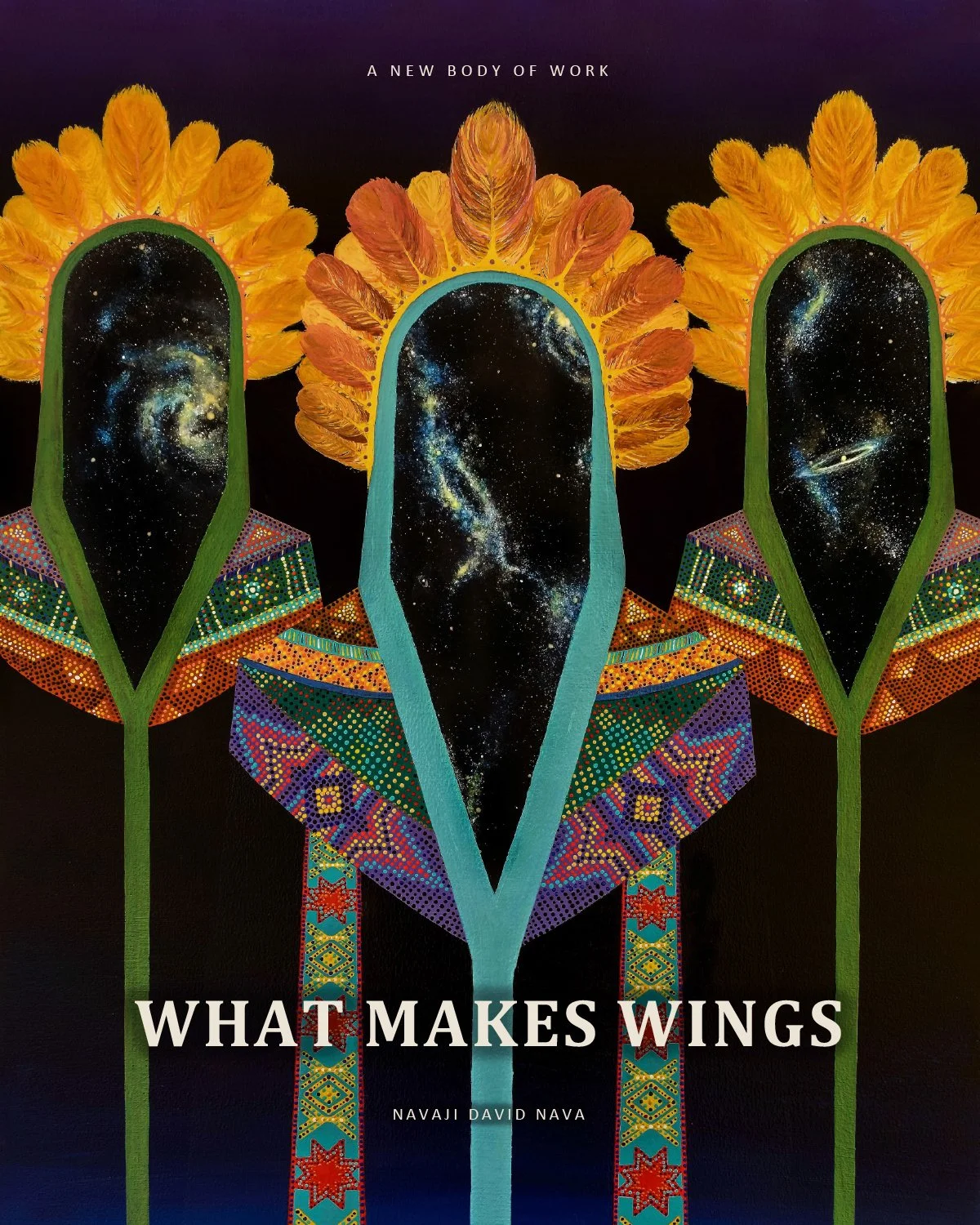
What Makes Wings extends from the symbolic world of The Powers. On this page it appears only as evidence of continuity: a glimpse of how a two-dimensional image can generate new research in symbol, body, costume, and space.
The fuller material and spatial development belongs to Navaji's companion 3-D practice.
View selected 3-D practice ↗Selected visual practice · 2-D
The medium changes.
The inquiry continues.
Painting, photography, and illustration are different vehicles for the same artistic impulse: to give form to what is otherwise difficult to see, say, or hold.
Rooted in South Texas, shaped by a multi-ethnic Mexican-American and queer experience of living between categories, and developed through a life of embodied artistic discipline, Navaji's work asks whether image can become a place of recognition—between person and spirit, body and land, memory and possibility, visible and invisible.
All artworks, photographs, and illustrations © Navaji David Nava. No reproduction, redistribution, or derivative use without written permission.